
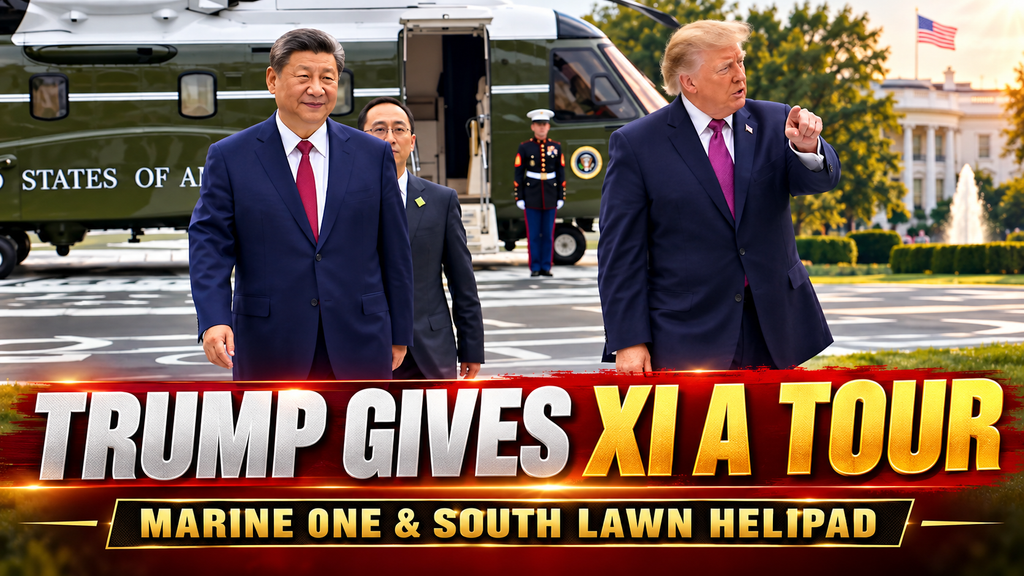
President Trump Gives the President of China a Tour of Marine One and the South Lawn Helipad
A visit to the White House often includes moments that go beyond formal meetings and official statements. Presidential aircraft, ceremonial locations, and private tours can provide a closer look at the traditions and operations surrounding the American presidency. A reported tour of Marine One and the South Lawn helipad involving U.S. President Donald Trump and Chinese President Xi Jinping offers an opportunity to explore the significance of these locations and their place in American presidential diplomacy.
Marine One: A Symbol of the American Presidency
Marine One is the official call sign used by any United States Marine Corps aircraft carrying the president of the United States. The name is widely associated with the distinctive green-and-white presidential helicopters that transport the president between the White House, military facilities, airports, and other destinations.
More than a means of transportation, Marine One represents the security, planning, and logistical coordination required to move the president safely. Every presidential flight involves specialized personnel, careful preparation, and strict security procedures.
The helicopter also plays an important role in the public image of the presidency. Images of Marine One landing on the White House grounds or departing for an official engagement have become familiar scenes in American political life. For international visitors, seeing the aircraft up close can offer insight into one of the most recognizable features of the U.S. presidential system.
The White House South Lawn Helipad
The South Lawn is an important part of the White House grounds. It serves as a location for ceremonial events, official arrivals, public appearances, and presidential helicopter operations.
The helipad provides a designated area for presidential helicopter movements, allowing aircraft to arrive and depart as part of carefully coordinated security and transportation arrangements.
The surrounding grounds also contribute to the symbolism of the White House. The location combines the practical requirements of presidential operations with the historic setting of the executive residence.
A tour of this area can help visitors understand how the White House functions beyond its well-known meeting rooms and ceremonial spaces. It also illustrates how architecture, security, and transportation work together to support the daily responsibilities of the presidency.
Trump and Xi Jinping: A Meeting of Two Major Powers
Donald Trump and Xi Jinping are prominent political leaders whose interactions attract international attention because of the importance of relations between the United States and China.
The two countries maintain extensive economic ties and play influential roles in international trade, technology, security, and global diplomacy. Their relationship includes areas of cooperation as well as significant disagreements.
Meetings between American and Chinese leaders can therefore carry importance beyond the immediate agenda. Even informal interactions, official tours, and ceremonial exchanges may attract attention because they take place within a broader diplomatic relationship.
A visit involving Marine One and the South Lawn helipad can be viewed in this context. Such a setting highlights the ceremonial and institutional aspects of the American presidency while providing a distinctive backdrop for an encounter between two world leaders.
The Role of Informal Diplomacy
Diplomacy is not limited to conference rooms, official speeches, or signed agreements. Informal conversations and guided visits can also form part of the relationship-building process between national leaders.
Showing a visiting leader an important presidential aircraft or a significant location on White House grounds can provide a more personal dimension to an official visit. These moments may help create opportunities for conversation outside the structure of formal negotiations.
However, the significance of an informal gesture should not be overstated. A tour or public appearance does not, by itself, demonstrate that a policy agreement has been reached or that disagreements between governments have been resolved.
Instead, such moments are best understood as part of the wider setting in which international relations develop. Their importance depends on the broader diplomatic circumstances and any confirmed outcomes associated with the visit.
Why Marine One Attracts International Attention
Marine One attracts interest because it combines advanced aviation, presidential security, and a highly recognizable public role.
The aircraft and its supporting operations involve specialized crews and coordination among multiple security and government personnel. Presidential helicopter movements must be planned with careful attention to safety, scheduling, and operational requirements.
For observers, the helicopter represents both the practical side of presidential travel and the traditions associated with the office of the U.S. president.
A close-up view of Marine One can therefore be an interesting feature of a presidential visit, particularly when the visitor is a senior foreign leader. It offers a glimpse into a part of American government that many people usually see only through photographs and television coverage.
The Broader Significance of U.S.-China Relations
The relationship between Washington and Beijing is one of the most consequential bilateral relationships in international affairs. Decisions made by the two governments can influence global markets, supply chains, technological development, regional security, and diplomatic cooperation.
Economic issues remain an important part of the relationship. Both countries have significant interests in international commerce, investment, manufacturing, and the stability of the global economy.
Security and geopolitical questions are also central to discussions between the two governments. Differences over regional issues, technology restrictions, and trade policies can complicate efforts to build a stable relationship.
For this reason, public encounters between American and Chinese leaders are often examined by journalists, analysts, and international audiences. Observers may consider not only the leaders’ statements but also the context, timing, and symbolism of their meetings.
Nevertheless, meaningful conclusions about policy or diplomatic progress should be based on confirmed statements, official announcements, and reliable reporting rather than assumptions drawn from a photograph or a brief interaction.
A Presidential Setting With Symbolic Importance
The combination of Marine One and the White House South Lawn creates a distinctive setting for presidential activities. It brings together the operational needs of the presidency and the public symbolism associated with the White House.
For an international audience, a tour of these locations can offer a different perspective on the American executive branch. It shifts attention away from formal negotiations and toward the people, aircraft, facilities, and procedures that support presidential responsibilities.
When such a visit involves leaders from the United States and China, the setting naturally attracts additional interest because of the global importance of their countries.
Conclusion
Marine One and the South Lawn helipad are closely associated with the daily operations and public image of the American presidency. A reported tour involving President Donald Trump and Chinese President Xi Jinping brings these recognizable presidential locations into the wider discussion of U.S.-China relations.
The visit provides an opportunity to examine the role of presidential aviation, the symbolism of the White House grounds, and the importance of informal encounters in international diplomacy.
Although ceremonial tours can create memorable images, their political significance should be assessed alongside verified reporting and official information. As the United States and China continue to navigate a complex relationship, meetings and public interactions between their leaders remain subjects of considerable international interest.
Editorial note: Before publication, verify the event’s date, the identities of the participants, and whether the tour took place as described. Add links to reliable news reports or official White House coverage to substantiate the event-specific details.
Explore President Donald Trump’s tour of Marine One and the White House South Lawn helipad with insights into presidential aviation and U.S.-China relations.